Call For Free Estimate
Call For Free Estimate

The most common paving options for parking lots and large surfaces include asphalt, concrete, pavers, and gravel, each with distinct advantages in cost, durability, and maintenance. Choosing the right material depends on your budget, traffic volume, and the specific demands of your property in the New Orleans area.
Selecting the right paving material for a parking lot or other large surface is a decision that affects your property for years to come. The material you choose determines how long the surface lasts, how much maintenance it requires, and how it performs under heavy traffic and harsh weather. For property owners in New Orleans, where heat, humidity, and heavy rain are constant factors, the choice deserves careful consideration. TurnKey Concrete Team works with commercial and residential clients across the region to find the best paving solution for every project.
Concrete is one of the most durable options for parking lots and large surfaces. A properly installed concrete parking lot can last 30 years or more with basic maintenance. Concrete handles heavy loads well, making it a strong choice for properties that see truck traffic, delivery vehicles, or high-volume daily use.
One of the key advantages of concrete in Louisiana is its resistance to heat damage. Unlike asphalt, which softens in extreme temperatures, concrete maintains its structural integrity even during the hottest summer days. It also reflects more sunlight, which keeps the surface cooler and can reduce the heat island effect in large paved areas.
Concrete does come with a higher upfront cost compared to asphalt, but its longer lifespan and lower maintenance needs often make it more cost-effective over time. For businesses that want a clean, professional appearance and a surface that will hold up for decades, concrete is hard to beat. Professional paving services ensure proper thickness, reinforcement, and drainage for commercial-grade results.
For parking lots that handle heavy trucks, loading docks, or industrial equipment, reinforced concrete with rebar and increased thickness provides the strength needed to prevent cracking and surface damage. A six- to eight-inch slab with rebar grid is standard for heavy-duty commercial applications. While the investment is higher, the payoff comes in reduced repair costs and a surface that stands up to daily abuse.
Asphalt is the most widely used paving material for parking lots in the United States, and it remains popular in Louisiana for good reason. The initial installation cost is significantly lower than concrete, often 30 to 40 percent less per square foot. Asphalt is also quicker to install, which means less disruption to your business during construction.
However, asphalt has some notable drawbacks in Louisiana’s climate. High temperatures cause asphalt to soften, which can lead to rutting in areas where vehicles park or turn frequently. The material also requires more ongoing maintenance, including seal coating every two to three years and periodic crack filling to prevent water infiltration.
An asphalt parking lot typically lasts 15 to 20 years with proper maintenance, which is noticeably shorter than a concrete surface. For property owners who need a budget-friendly option and are willing to invest in regular upkeep, asphalt remains a practical choice.
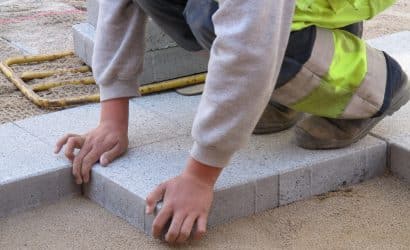
Interlocking concrete pavers offer a versatile and visually appealing option for parking lots, driveways, and pedestrian areas. Pavers come in a wide range of shapes, colors, and patterns, allowing property owners to create a distinctive look that enhances curb appeal. They are particularly popular for retail centers, restaurants, and hospitality properties in the New Orleans area where appearance matters.
From a practical standpoint, pavers have an important advantage: individual units can be removed and replaced if damage occurs. This means repairs are simpler and less expensive than patching a concrete or asphalt surface. Pavers also allow water to drain through the joints between units, which can help manage stormwater runoff, an increasingly important consideration in flood-prone areas.
The main disadvantage of pavers is cost. Material and labor for a paver parking lot can be two to three times higher than asphalt. Pavers also require a well-prepared base to prevent shifting and settling, and periodic maintenance to keep the joint sand in place. For smaller parking areas or accent sections combined with other materials, pavers can be an excellent option.
Gravel is the most affordable paving option and can work well for overflow parking areas, rural properties, and temporary lots. Installation is fast and straightforward, and the material provides decent drainage. In some cases, gravel lots can serve as an interim solution while a property owner plans for a permanent paved surface.
The downsides of gravel are significant for commercial use. The surface is uneven, difficult to maintain clear striping on, and not ADA compliant without additional improvements. Gravel also migrates over time, requiring regular regrading and replenishment. For most commercial properties in the New Orleans metro area, gravel is best suited for secondary or temporary use rather than primary customer parking.
Pervious or permeable concrete is a specialized option that allows water to pass through the surface and into the ground below. This technology is gaining attention in New Orleans and other areas where stormwater management is a priority. Pervious concrete can significantly reduce runoff from large paved areas, which helps prevent flooding and reduces the load on municipal drainage systems.
The tradeoff is that pervious concrete is not as strong as traditional concrete and requires more careful maintenance. The pores in the surface can become clogged with sediment and debris, requiring periodic vacuuming or pressure washing to maintain drainage capacity. It is best suited for low-speed, lighter-traffic areas such as overflow parking or pedestrian zones. For the structural paving of your main lot, combining pervious sections with standard concrete installation provides both strength and drainage benefits.
Selecting the right paving material involves weighing several factors specific to your property and needs.
Every property is different, and the best paving choice depends on your specific situation. The team at TurnKey Concrete Team can evaluate your property, discuss your goals and budget, and recommend the paving solution that delivers the best value for your investment. We serve commercial and residential clients throughout the Greater New Orleans area with honest advice and quality workmanship.
Contact us at 504-294-3820 or visit our contact page to request a free estimate for your parking lot or large surface paving project.
Concrete is generally the best choice for commercial parking lots due to its durability, low maintenance, and long lifespan of 30 years or more. It handles heavy traffic and Louisiana’s heat better than asphalt.
Costs vary widely depending on the material and size. Asphalt typically runs $3 to $5 per square foot, concrete ranges from $5 to $10 per square foot, and pavers can cost $10 to $20 or more per square foot. These are rough estimates that depend on site conditions and project scope.
An asphalt parking lot typically lasts 15 to 20 years with regular maintenance, while a concrete lot can last 30 years or longer. Concrete requires less ongoing maintenance, which can offset its higher initial cost over time.
Permeable concrete can be an excellent stormwater management tool in flood-prone areas like New Orleans. It works best in lower-traffic areas and should be combined with traditional concrete for high-traffic sections that need maximum strength.
Yes. Proper drainage is essential for any parking lot to prevent standing water, surface damage, and flooding. Drainage design should be part of every paving project, especially in Southeast Louisiana where heavy rainfall is common.
In many cases, yes. If the base and sub-grade are still in good condition, resurfacing with a new layer of asphalt or a concrete overlay can extend the life of the lot at a fraction of the cost of full replacement. A professional evaluation will determine if resurfacing is a viable option.
 TurnKey Concrete Team
  Jul 8, 2026