Call For Free Estimate
Call For Free Estimate

Concrete driveways generally outlast asphalt driveways by a significant margin, with concrete lasting 25 to 30 years or more compared to asphalt’s typical 15 to 20 years. In the New Orleans climate, where heat and heavy rainfall are constant factors, concrete’s durability and low maintenance give it a clear advantage for most homeowners.
When it comes to paving a driveway in New Orleans, most homeowners find themselves comparing two materials: concrete and asphalt. Both have loyal supporters, and both can look great when freshly installed. But the real question is not just which one looks better on day one. It is which one will still be performing well a decade or two from now. At TurnKey Concrete Team, we help property owners make informed decisions, and we believe understanding longevity is the key to choosing wisely.
A well-installed concrete driveway can last 25 to 30 years, and many last even longer with proper care. Asphalt driveways, on the other hand, typically last between 15 and 20 years before they need full replacement. That difference of a decade or more adds up quickly when you consider the cost of tearing out and repaving an asphalt surface halfway through what could have been a concrete driveway’s life.
The reason for this gap comes down to material composition. Concrete is a rigid pavement that resists deformation under load. Asphalt is flexible, which sounds like an advantage, but that flexibility means it softens in heat, develops ruts from parked vehicles, and gradually breaks down as its petroleum-based binder oxidizes and becomes brittle.
Our subtropical climate creates specific challenges for both materials, but asphalt faces the tougher fight. Summer temperatures regularly push past 95 degrees, and asphalt absorbs and retains heat far more than concrete. On a scorching July afternoon, an asphalt driveway can reach surface temperatures above 140 degrees. That heat softens the material, making it vulnerable to impressions from vehicle tires, kickstands, and even heavy foot traffic.
Concrete stays cooler and maintains its structural integrity even during our hottest stretches. It reflects more sunlight rather than absorbing it, which is a small but meaningful benefit for your home’s overall heat island effect.
Rain is the other major factor. New Orleans receives over 60 inches of rainfall annually, and heavy downpours are a regular occurrence. Water is the enemy of both materials, but asphalt is more susceptible to water infiltration, especially once small cracks develop. Water seeps beneath the surface, weakens the base, and accelerates pothole formation. Concrete, when properly sealed, resists water penetration more effectively and is less prone to the erosion cycle that plagues asphalt in wet climates.
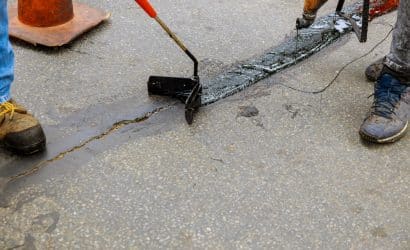
Asphalt requires seal coating every two to three years to maintain its water resistance and slow oxidation. Skipping this maintenance shortens the driveway’s life considerably. Cracks need to be filled promptly because, once water gets beneath an asphalt surface, the damage spreads quickly.
Concrete maintenance is simpler. A quality sealer applied every three to five years protects the surface, and routine cleaning handles most wear. Concrete can develop cracks too, especially in areas with expansive clay soils like many New Orleans neighborhoods, but those cracks tend to be easier to repair and less likely to cause progressive failure. Our driveway specialists often recommend a joint-cutting pattern during installation that controls where cracks form, keeping the surface looking clean for years.
Asphalt typically costs less to install, often coming in 20 to 30 percent lower than concrete per square foot. For homeowners on a tight budget, that initial savings can be appealing. However, when you add up the cost of regular seal coating, crack repairs, and the likelihood of needing a full replacement five to ten years sooner, concrete usually delivers better value over the full ownership period.
Consider a 500-square-foot driveway. The asphalt installation might save $500 to $1,000 upfront. But seal coating every two to three years at $100 to $200 per application adds $1,000 or more over 20 years. Then factor in a full replacement at year 15 or 18, and the cost advantage disappears entirely.
Fresh asphalt has a clean, dark appearance that some homeowners find attractive. But that color fades to gray within a year or two, and stains from oil and fluids are notoriously difficult to remove from asphalt surfaces.
Concrete offers far more design flexibility. Beyond the classic broom finish, homeowners can choose stamped patterns, exposed aggregate, colored concrete, or combinations that complement their home’s architecture. In neighborhoods throughout New Orleans, from the Garden District to Lakeview, a well-designed concrete driveway enhances the property’s character and value. For those interested in decorative options, our stamped concrete services offer patterns that mimic brick, stone, and other premium materials at a fraction of the cost.
Asphalt is a petroleum product, and its production involves significant energy consumption and emissions. Concrete’s primary ingredient, cement, also has an environmental footprint, but concrete driveways last longer, reducing the frequency of replacement and the associated resource use. Concrete is also fully recyclable at the end of its life, often crushed and reused as aggregate for new construction projects.
The heat island effect is worth mentioning again here. In a city like New Orleans, where summer heat is already intense, choosing lighter-colored concrete over dark asphalt helps reduce localized temperatures around your home. It is a small contribution, but when multiplied across a neighborhood, the difference is measurable.
For the vast majority of New Orleans homeowners, concrete is the stronger choice. Its superior durability in heat, better resistance to water damage, lower long-term maintenance costs, and greater design versatility make it the practical winner. Asphalt has its place, particularly for large commercial areas where initial cost is a primary concern, but for residential driveways in our climate, concrete delivers more value year after year.
If you are weighing your options and want a professional assessment for your property, TurnKey Concrete Team is here to help. Call us at 504-294-3820 or reach out through our contact page to discuss your project with our team.
No, asphalt performs worse in high heat. It softens and becomes pliable when temperatures rise, leading to ruts and impressions. Concrete maintains its rigidity and structural strength even on the hottest days in South Louisiana.
Both materials can crack, but the nature of cracking differs. Concrete cracks are typically controlled through strategic joint placement during installation. Asphalt cracks tend to spread and allow water infiltration, which accelerates further damage.
Asphalt should be seal coated every two to three years to maintain its condition. Concrete needs resealing only every three to five years, and some concrete driveways perform well with even less frequent sealing depending on the product used.
Generally, yes. Concrete driveways are associated with higher-quality construction and better curb appeal. In the New Orleans real estate market, buyers tend to view concrete as a premium feature, particularly when decorative finishes are used.
Absolutely. The old asphalt is removed, the sub-base is inspected and prepared, and new concrete is poured in its place. This is a common upgrade that many New Orleans homeowners make when their asphalt driveway reaches the end of its useful life.
Concrete handles heavy loads better than asphalt because of its rigidity. If you regularly park trucks, trailers, or recreational vehicles on your driveway, concrete is the recommended choice. A thicker slab of five or six inches provides even greater load-bearing capacity.
 TurnKey Concrete Team
  Jul 8, 2026