Call For Free Estimate
Call For Free Estimate

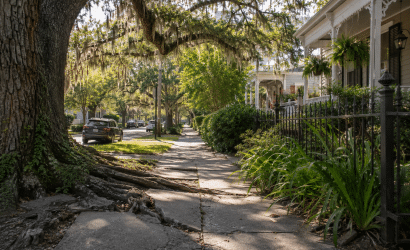
If you’re looking to upgrade your driveway, patio, walkway, or commercial lot in New Orleans, concrete paving is one of the smartest investments you can make. In a city known for heavy rainfall, humid summers, and the occasional tropical storm, your outdoor surfaces take a serious beating. Choosing the right material and the right contractor makes all the difference between a surface that lasts decades and one that needs constant repairs.
New Orleans has a subtropical climate that pushes outdoor surfaces to their limits. With annual rainfall averaging over 60 inches per year and summer temperatures regularly climbing into the low 90s°F, the conditions here are tough on pavement, patios, and walkways.
Add in the city’s notoriously high water table and the risk of seasonal flooding, and it’s easy to see why so many homeowners and business owners struggle to keep their outdoor surfaces in good shape. Asphalt softens in extreme heat. Pavers shift when the ground gets saturated. Gravel washes away with heavy rain.
Concrete, when properly installed and sealed, stands up to all of this and still looks great doing it.
Understanding why surfaces fail here helps you make a better choice from the start. New Orleans sits on soft, clay-heavy soil that expands when wet and contracts when dry. This constant movement puts stress on any surface installed above it especially ones that aren’t designed to flex or anchor properly.
Many older surfaces in the area were installed without adequate base preparation. Without a properly compacted sub-base, water infiltrates underneath, the soil shifts, and the surface above cracks and settles. This is one of the biggest reasons homeowners end up needing concrete repair and restoration just a few years after an installation.
Poor drainage design compounds the problem. If water isn’t directed away from the surface or if the surface doesn’t have enough slope pooling happens regularly, weakening the structure from below.
Professional concrete paving addresses every one of these challenges when done correctly. It starts with proper site preparation excavating to the right depth, grading for drainage, and compacting the base so there’s a stable foundation beneath the slab.
From there, the concrete mix is selected to handle the local climate. Reinforcement typically rebar or wire mesh is embedded in the slab to give it tensile strength. Control joints are cut at strategic intervals so that if any minor cracking occurs, it follows a predictable, manageable path instead of spreading randomly across the surface.
The result is a surface that’s resistant to the heat, rain, and humidity that New Orleans throws at it year after year.
For driveways specifically, concrete driveway installation provides a load-bearing surface that can handle vehicle weight without rutting or softening — something asphalt struggles with during New Orleans summers.
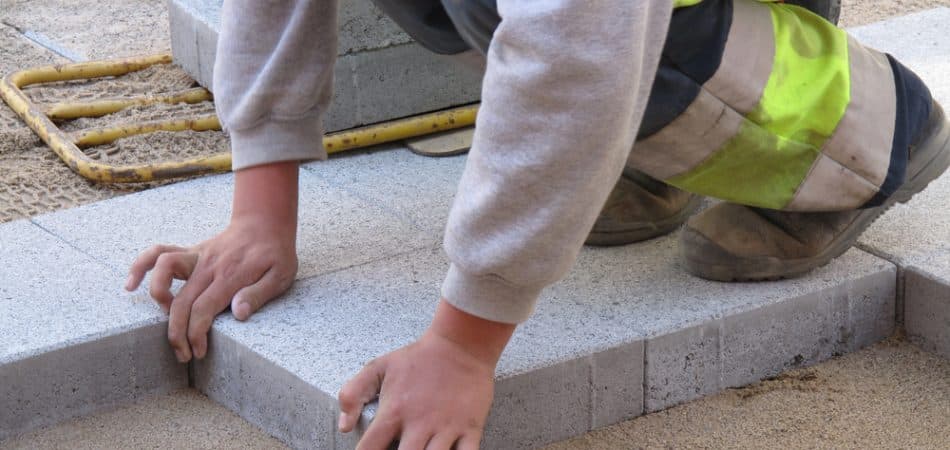
 Site excavation and base layer compaction for a stable foundation
One of the biggest misconceptions about concrete is that it’s plain and industrial-looking. That’s simply not the case anymore. Modern concrete finishing techniques have made it one of the most versatile materials available for outdoor spaces.
Stamped concrete is a popular option for patios, pool decks, and entry areas. It replicates the look of natural stone, brick, wood, or tile — without the cost or maintenance those materials require. With the right pattern and color, a stamped concrete patio can completely transform the look of a backyard.
Decorative concrete goes even further with options like staining, engraving, and exposed aggregate finishes. These techniques give property owners the ability to customize their outdoor surfaces to match the style of their home or business.
Once any concrete surface is installed, concrete sealing and coating protects the finish from UV rays, moisture penetration, and staining — keeping it looking clean and vibrant for much longer.
Concrete paving isn’t just about appearance it’s an investment in the long-term value and function of your property. A properly installed concrete surface can last 25 to 30 years or more with routine maintenance, outpacing asphalt and most paver alternatives by a significant margin.
If an existing surface has seen better days but the underlying structure is still sound, concrete resurfacing can restore it to like-new condition without the cost of a full replacement. And when a section does need attention, targeted concrete installation work can address it efficiently.
For business owners, commercial-grade paving makes a strong first impression on customers and clients. Well-maintained, attractive outdoor surfaces signal professionalism and they reduce liability exposure from uneven or damaged pavement.
If you’re ready to upgrade your outdoor spaces with a surface that handles everything New Orleans weather can deliver, TurnKey Concrete Team is here to help. Contact us today for a free estimate and let’s talk about what concrete paving can do for your property.
With proper installation and routine maintenance, a concrete paved surface typically lasts 25 to 30 years or longer. New Orleans’ humid climate and heavy rainfall make it especially important to ensure proper drainage and apply a quality sealant to protect the surface from moisture intrusion and UV exposure.
For most residential and commercial applications in New Orleans, concrete generally outperforms asphalt in terms of longevity and heat resistance. Asphalt tends to soften during the intense summer heat common in the region, whereas concrete maintains its structural integrity. Concrete also offers far more design flexibility through decorative finishing options.
Most concrete surfaces in New Orleans benefit from resealing every two to three years, depending on traffic volume, sun exposure, and the type of sealant used. Resealing protects against moisture infiltration, staining, and surface wear — all of which are accelerated in a humid, high-rainfall environment.
Yes — in many cases, damaged concrete can be repaired or resurfaced rather than fully replaced. If the underlying base is stable and the damage is limited to the surface layer, resurfacing is a cost-effective option that restores the appearance and function of the slab without the expense of a full tear-out and reinstall.
 TurnKey Concrete Team
  May 26, 2026