Call For Free Estimate
Call For Free Estimate

Concrete sidewalks take a beating in New Orleans. Between the subtropical heat, heavy seasonal rainfall, and the city’s notoriously unstable soil, even well-installed sidewalks can develop cracks, uneven slabs, and surface damage within just a few years.
Knowing how to maintain and repair concrete sidewalks in New Orleans is essential for homeowners and property managers who want to protect their investment and keep walkways safe. This guide walks you through everything you need to know, from spotting early warning signs to understanding when a professional repair is the right call.
New Orleans sits at or below sea level, and the ground beneath the city is largely made up of soft, water-saturated soils primarily clay and organic material deposited by the Mississippi River over thousands of years. This creates a uniquely challenging environment for concrete structures.
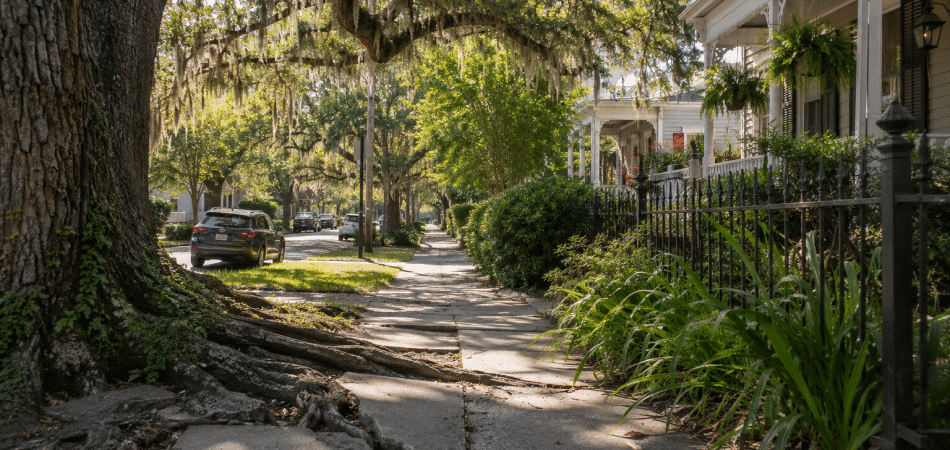
Unlike cities built on bedrock or stable fill, properties in New Orleans deal with constant ground movement. Soil expands when it absorbs water and contracts during dry spells. Over time, this cycle pushes and pulls at concrete slabs, causing them to shift, crack, and heave.
Understanding these root causes helps you prioritize both maintenance and repairs more effectively.
Catching concrete problems early is the most cost-effective approach. Small cracks and surface defects are easy to address. Left unattended, they invite water intrusion, root growth, and structural displacement, turning a minor repair into a full slab replacement.
Walk your sidewalks regularly, especially after heavy rain events or particularly hot and dry stretches. Look at both the surface and the edges of each slab.
Sidewalk lips of ½ inch or more are generally considered a trip hazard and may create liability exposure for property owners. In New Orleans, city ordinances typically require property owners to maintain the sidewalk in front of their property. If your sidewalk has become a hazard, addressing it promptly is both a safety and legal priority.
Preventive maintenance significantly extends the life of your sidewalk and reduces the frequency and cost of repairs. Here’s what regular upkeep looks like for New Orleans properties.
Consistent attention to these basics adds years to your sidewalk’s functional lifespan.
Not every damaged sidewalk needs to be torn out and replaced. Understanding the range of repair options helps you make smarter decisions — and have better conversations with contractors.
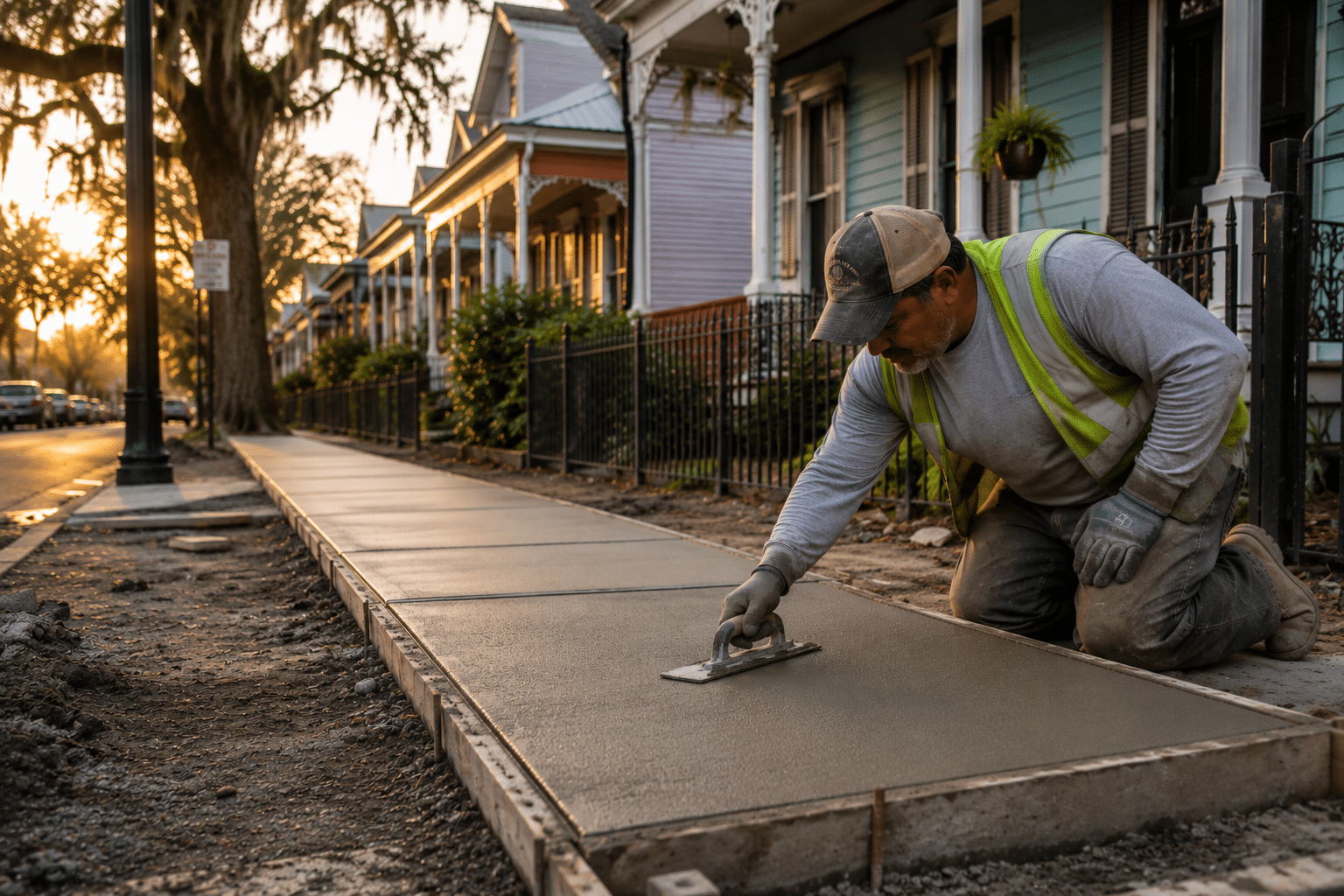 Surface repairs are appropriate when the structural integrity of the slab is intact, but the finish has degraded. This includes scaling, spalling, minor surface cracking, and worn areas.
Concrete resurfacing is a popular option here. A new layer of concrete or specialized overlay material is bonded to the existing slab, restoring both appearance and surface durability. This is typically more affordable than replacement and works well when the underlying slab is still sound.
For wider cracks or joints that have separated, professional crack injection, routing, and sealing may be needed. This involves cleaning out the crack, applying a bonding agent, and filling with a flexible or rigid repair compound, depending on whether movement is still expected. TurnKey Concrete Team’s concrete repair and restoration services cover this type of work thoroughly.
When a sidewalk panel has sunk due to a void beneath it, mudjacking (also called slabjacking) is a common repair method. A slurry mixture is pumped beneath the slab to fill voids and lift it back to grade without the cost or mess of full replacement.
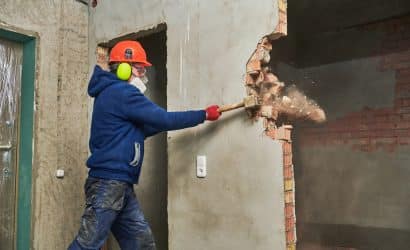
When a slab is too cracked, broken, or displaced to salvage, replacement is the right call. The old panel is removed and properly disposed of, the base is re-prepared, and new concrete is poured. For heavily damaged sidewalks, this produces the cleanest and most durable result. TurnKey Concrete Team handles both the demolition and new sidewalk installation as a complete service.
New Orleans is not a one-size-fits-all concrete market. The soil conditions, climate, and architecture of the city require contractors with genuine local experience. What works for a sidewalk in Dallas or Atlanta may not hold up here.
TurnKey Concrete Team is based in New Orleans and has deep familiarity with the specific challenges local properties face, from high-moisture soil environments to the impact of seasonal flooding on base materials. That local expertise shapes how they approach every project, from material selection to installation techniques.
#890459, Commercial License #3667Whether the job is a single-heaved panel or a full sidewalk replacement across a commercial property, the team brings the same attention to detail and quality standards.
If your sidewalk is showing cracks, uneven panels, or signs of surface wear, now is the right time to address it before small issues become bigger and more expensive repairs. TurnKey Concrete Team is ready to assess the condition of your sidewalk and provide a clear, honest recommendation. Call 504-294-3820 or request a free estimate online to get started.
Costs vary depending on the scope of damage and the type of repair needed. Surface resurfacing is generally less expensive than full panel replacement. Minor crack repairs are typically affordable, while lifting a sunken slab or replacing multiple panels involves more labor and materials. TurnKey Concrete Team provides free estimates, so you can get an accurate number before committing.
Small hairline cracks can be sealed with a DIY concrete caulk or filler as a temporary measure. However, cracks wider than a quarter-inch, displaced slabs, or any situation involving an underlying soil or drainage problem should be evaluated by a professional. Improper repairs can trap moisture or make future proper repairs harder.
A properly installed and regularly maintained concrete sidewalk can last 25–40 years in New Orleans, though the local environment does accelerate wear compared to drier climates. Sealing every few years and promptly addressing cracks significantly extends that lifespan.
In most cases, property owners are responsible for maintaining the sidewalk directly in front of their property, including repairs. If a city tree root caused the damage, there may be cases where the city shares responsibility — but this varies and typically requires a formal request or complaint process with city government. It’s worth checking with the City of New Orleans’ Department of Public Works for current guidelines.
 TurnKey Concrete Team
  Jun 4, 2026