Call For Free Estimate
Call For Free Estimate

A commercial concrete foundation involves careful planning, engineered design, soil analysis, and a multi-step construction process that differs significantly from residential work. Understanding what goes into a commercial foundation helps business owners and developers make smarter decisions about their building projects.
Commercial buildings carry heavier loads, span larger areas, and must meet stricter code requirements than most residential structures. That means the foundation beneath a warehouse, retail center, or office building needs to be engineered with precision from the very start. At TurnKey Concrete Team, we work with business owners and general contractors across the Greater New Orleans area to deliver commercial foundations built for long-term performance.

Whether you are developing a new property or expanding an existing commercial space, understanding the foundation process helps you plan timelines, manage budgets, and communicate effectively with your construction team. If you are also exploring residential options, our guide to professional concrete installation provides a helpful overview of what quality work looks like at any scale.
Every commercial foundation project begins with a thorough evaluation of the building site. Engineers and geotechnical specialists analyze the soil to determine its composition, load-bearing capacity, moisture content, and drainage characteristics. In Louisiana, this step is especially important because the region’s expansive clay soils behave unpredictably. Clay swells with moisture and contracts during dry periods, which can cause serious problems for a foundation that was not designed to handle that movement.
Soil testing also reveals the depth to stable, load-bearing strata beneath the surface. In the New Orleans area, where soft alluvial soils and a high water table are common, engineers may recommend deep foundation systems such as driven piles or drilled shafts to reach more stable ground. The results of these tests directly inform the foundation design, so cutting corners here can lead to expensive problems later. For a broader look at how foundations work in our region, visit our concrete foundation services page.
Once the soil data is in hand, a structural engineer designs the foundation to match the building’s specific requirements. This includes calculating the expected loads from the structure above, factoring in wind loads (critical in hurricane-prone Louisiana), and accounting for soil behavior over time. The engineer selects the foundation type, determines the dimensions and reinforcement specifications, and produces detailed drawings that guide the construction crew.
Common commercial foundation types include spread footings, mat foundations (also called raft foundations), and deep pile foundations. Spread footings distribute loads through individual pads beneath columns and walls. Mat foundations use a single thick slab that covers the entire building footprint, which is useful on weak soils because it spreads the load over a larger area. Pile foundations transfer loads through long, slender columns driven deep into the ground to reach stable soil or rock.

With the design finalized and permits secured, the physical work begins. The site is cleared of vegetation, debris, and any existing structures. The ground is then excavated to the required depth, which varies depending on the foundation type and local building codes. Proper grading ensures that water drains away from the foundation rather than pooling against it.
In the New Orleans area, dewatering is often necessary during excavation because the water table can sit just a few feet below the surface. Pumps remove groundwater from the excavation to create a dry, stable work area. TurnKey Concrete Team has extensive experience managing these challenges on commercial projects throughout the region. For information about related processes, our article on efficient concrete removal in New Orleans covers site preparation from a different angle.
Formwork defines the shape of the foundation. For commercial projects, forms are typically built from heavy-duty lumber, steel, or engineered form systems designed to withstand the pressure of large concrete pours. The forms must be level, properly braced, and precisely aligned to the engineering specifications.
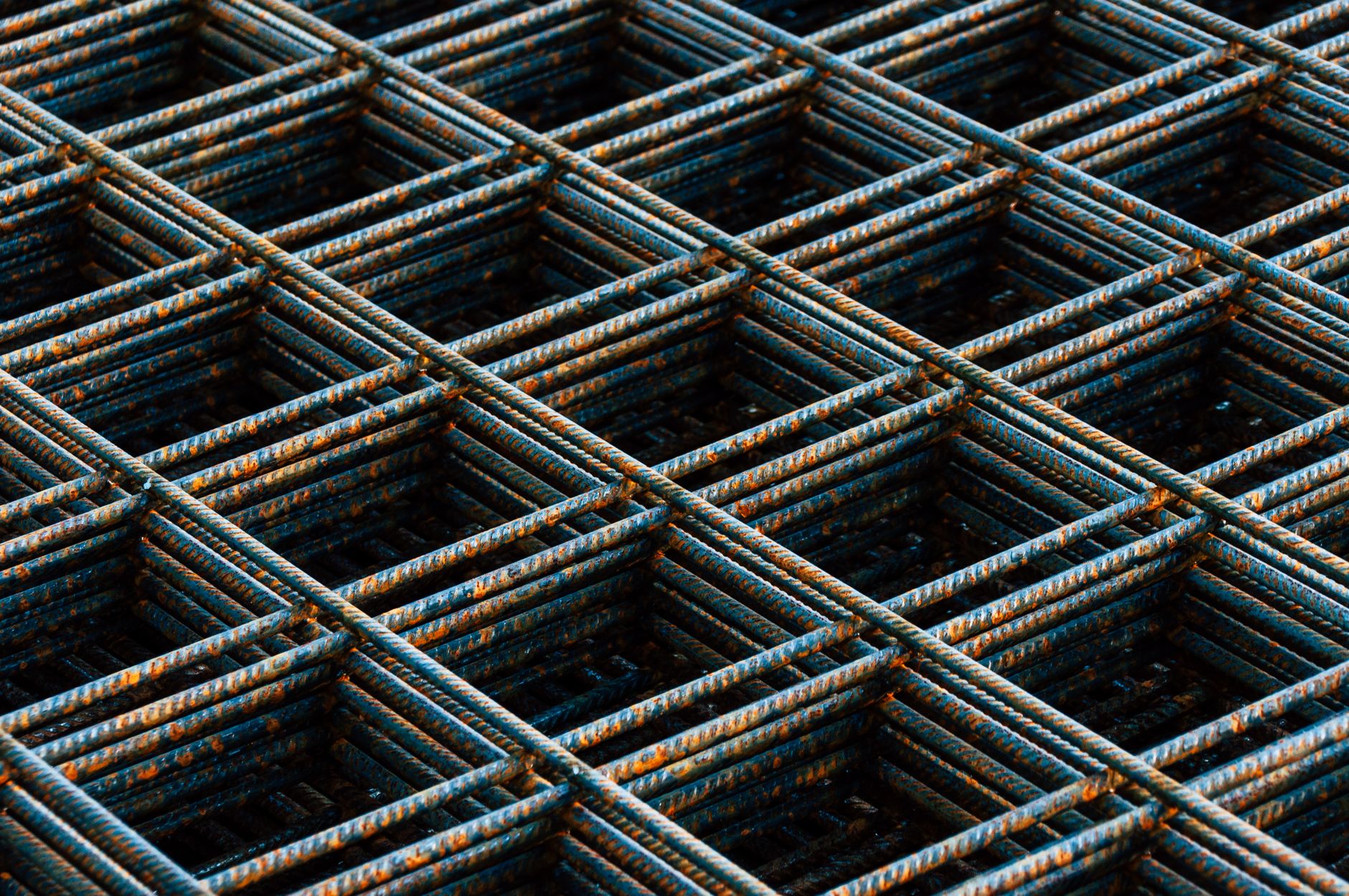
Steel reinforcement is then placed inside the forms. Rebar grids and cages provide tensile strength that concrete alone cannot offer. The size, spacing, and placement of the rebar are all specified by the structural engineer. On commercial projects, inspectors typically review the reinforcement before the pour is approved. This step is non-negotiable, because the reinforcement is what allows the foundation to flex under stress without cracking apart. If you are interested in how concrete structures handle wear over time, our post on how to prolong the life of concrete structures offers practical insights.
The concrete pour is one of the most critical phases of the project. Commercial foundations often require large volumes of concrete delivered by multiple trucks in a carefully coordinated sequence. The goal is a continuous pour that avoids cold joints, which are weak seams that form when fresh concrete is placed against partially cured concrete.
During the pour, crews use vibrators to consolidate the concrete and eliminate air pockets that could weaken the finished product. The surface is then leveled and finished according to the project requirements. In hot, humid conditions like those common in Louisiana, the timing of the pour matters. Crews often schedule pours for early morning to avoid the midday heat, which can cause the concrete to set too quickly.
After the pour, the concrete enters a curing period that typically lasts at least seven days. During curing, the concrete must be kept moist to achieve its full design strength. Methods include wet curing with water, applying curing compounds, or covering the surface with moisture-retaining blankets. Rushing this step compromises the foundation’s long-term durability.
Once cured, the foundation is inspected to verify it meets the engineering specifications and building codes. After passing inspection, the excavated areas around the foundation are backfilled and compacted. Drainage systems, including perimeter drains and waterproofing membranes, are installed to protect the foundation from moisture damage over time. For insights on another protective measure for commercial and residential concrete, see our article on how to maintain polished concrete for long-lasting results.
Building a commercial foundation in the New Orleans area is not the same as building one in Dallas, Atlanta, or Chicago. The soil, water table, hurricane risk, and regional building codes all demand specialized knowledge. TurnKey Concrete Team brings that local expertise to every commercial concrete foundation project we take on. We understand the unique challenges of building in Southeast Louisiana, and we work closely with engineers, architects, and general contractors to deliver foundations that perform reliably for decades.
If you are planning a commercial construction project in New Orleans, Metairie, Kenner, Baton Rouge, or anywhere in the surrounding area, we are here to help. Call TurnKey Concrete Team at (504) 294-3820 or visit our contact page to discuss your project. We are open Monday through Friday from 7 a.m. to 6 p.m., Saturday from 8 a.m. to 6:30 p.m., and Sunday from 10 a.m. to 4 p.m.
The timeline depends on the size and complexity of the project. A small commercial foundation may take two to three weeks from excavation to completion, while larger projects can take several months. Weather, soil conditions, and permitting timelines in the New Orleans area can all affect the schedule.
Commercial foundations are typically thicker, more heavily reinforced, and designed to support significantly greater loads than residential foundations. They also require more extensive engineering, soil testing, and permitting. The construction process involves larger crews, higher concrete volumes, and stricter inspection requirements.
Foundation depth depends on the soil conditions, the building’s weight, and local codes. In the New Orleans area, shallow foundations may sit two to four feet below grade, while deep pile foundations can extend 40 feet or more to reach stable bearing strata. A geotechnical engineer determines the appropriate depth based on site-specific testing.
Commercial foundations typically use a concrete mix with a compressive strength of 3,000 to 5,000 PSI or higher, depending on the structural requirements. The mix design may include additives for workability, durability, or resistance to sulfate attack, which is a consideration in Louisiana’s sulfate-rich soils.
Yes. Regular inspections, proper drainage maintenance, and prompt repair of any cracks or water intrusion issues are essential for protecting your investment. Commercial foundations are designed for longevity, but neglecting maintenance can lead to costly structural problems over time.
In many cases, yes. Methods such as underpinning, carbon fiber reinforcement, and epoxy crack injection can restore structural integrity without full replacement. The right approach depends on the type and extent of the damage. A professional assessment is the first step toward determining the best solution.
 TurnKey Concrete Team
  Apr 16, 2026